Learn About Ducks!
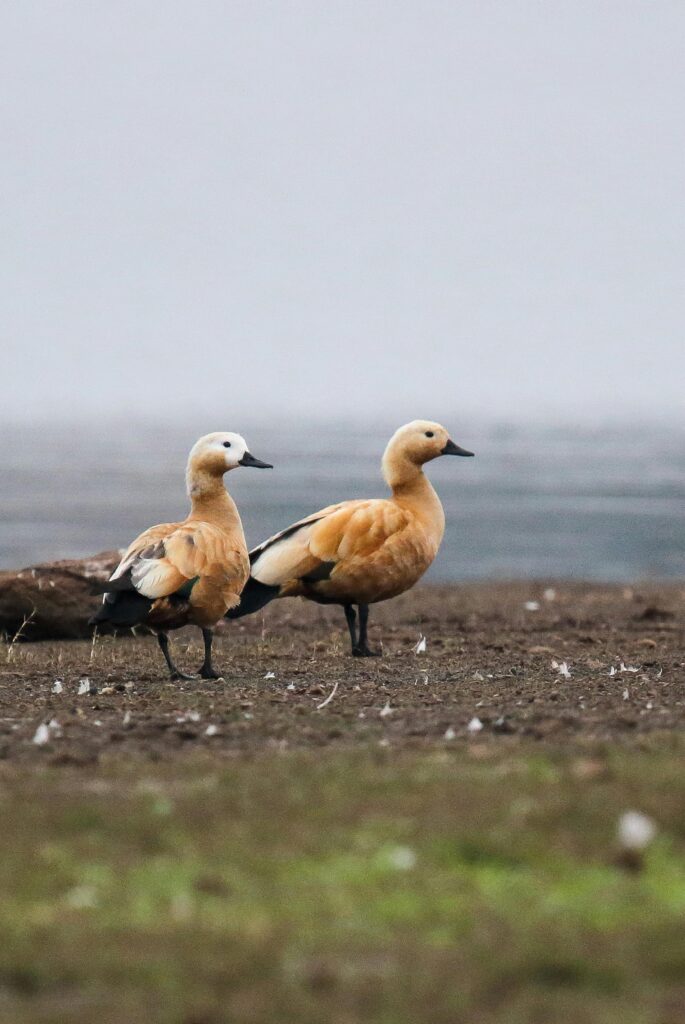
They are one of the two “stiff-tail” ducks, the other being the Masked Duck, which occur in North America. Males in alternate plumage are reddish brown overall, with the head having a black crown extending to the eyeline and down the back of the neck and a distinct white cheek patch, bright pale blue bill with a dark tip, and a dark gray black tail. Females and young males are pale gray brown overall, darker gray brown on the back, have a dark crown, and a notable dark stripe on the pale cheek below the eye.
Ruddy Duck
The Ruddy Duck is a small, diving duck with migratory and nonmigratory populations in North America and the Caribbean Islands, but the core of their breeding range is in the Prairie Pothole Region of North America, where an estimated 86 percent of the breeding population occurs. Smaller breeding populations occur in Alaska, the Intermountain West, Southern Great Plains, and the Great Lakes. Relatively small non-migratory populations breed in the Intermountain West (southern latitudes), Central and Southern California, northern and western Mexico, and some Caribbean Islands.
Hooded Merganser
Hooded Mergansers are the smallest of the three merganser species and poorly studied compared to most other waterfowl. Their range is restricted to North America. Breeding birds occur in two disjunct areas—throughout the east (roughly east of the Missouri River and Mississippi below its confluence with the Missouri, but including most of Missouri, Arkansas and Louisiana) where they reach their highest breeding density, and in the Pacific Northwest, including British Columbia, western Montana, northern Idaho, Washington, and portions of Oregon. Hooded Mergansers are cavity nesters and readily use constructed nest boxes.
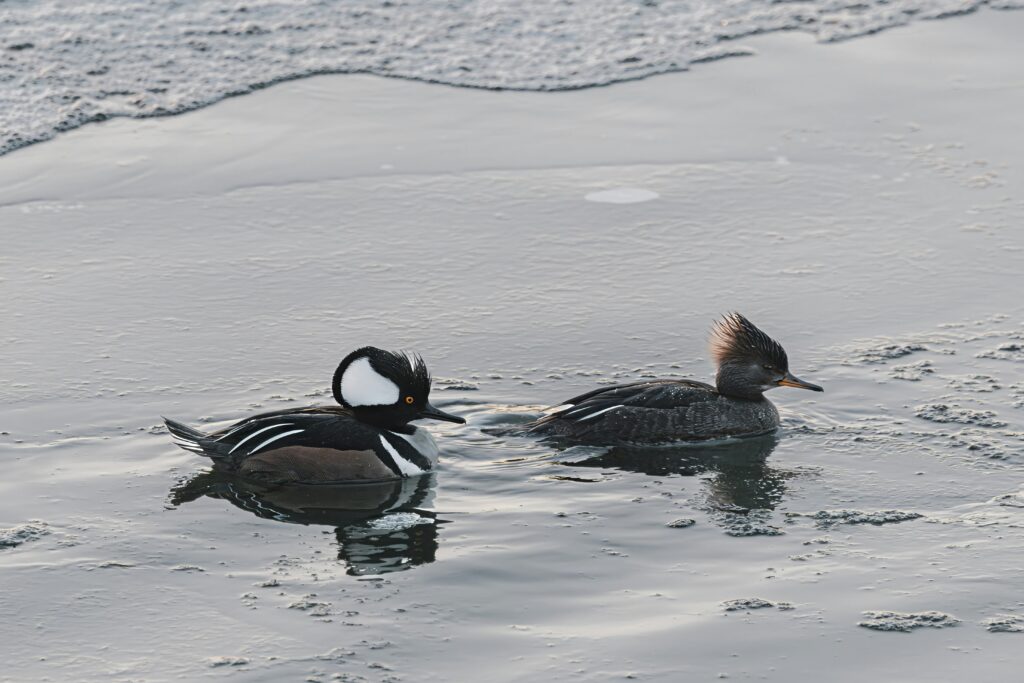
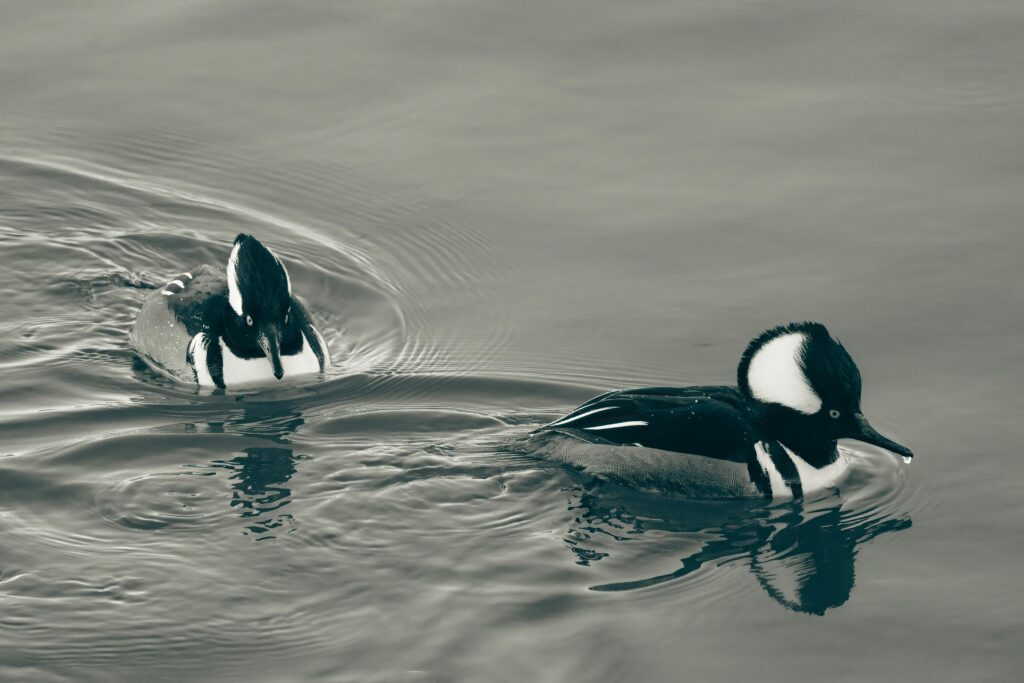
Males are easily distinguished by the white, fan-shaped crest on their black head. The neck and back are black, with long white and black tertial feathers, the sides are brown, but have notable black and white vertical stripes towards the breast, and the belly and breast are white. The bill is narrow and black. Females are brown-gray overall with a gray-brown crest, a white belly, and a narrow yellow gray bill. Nests are associated with forested wetlands throughout their range.
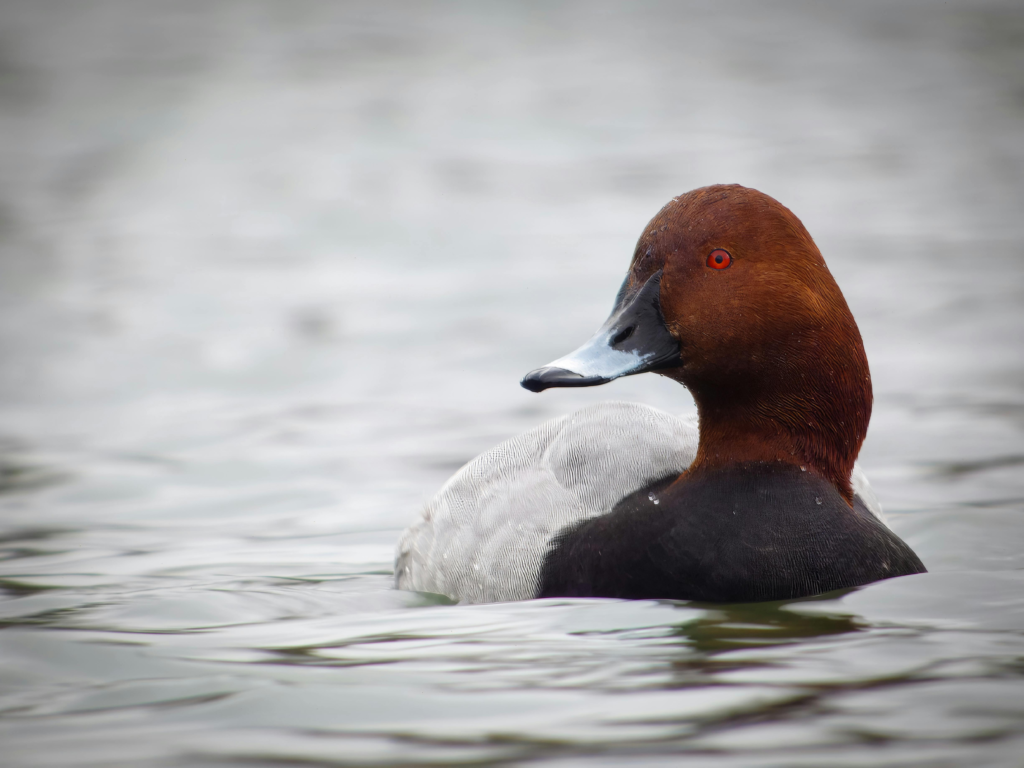
The Redhead is a large diving duck found only in North America. Males are recognized by their chestnut-red head, steep forehead, and bluish-gray bill with a whitish band near the tip. The breast, lower neck, and upper back are black, while the back and sides are gray with fine silvery vermiculation. The belly is white. Females have brownish-gray bodies, buffy-brown heads, and white belly feathers. In flight, males display a gray back and upper wings, while females appear drab brown.
Redhead
Redheads breed in semi-permanent freshwater wetlands in western Canada, Alaska, and parts of the Intermountain West of the United States. During migration and winter, they use large freshwater lakes, rivers, and coastal bays, including the Great Lakes. A significant portion (50-80%) of the population winters in Laguna Madre, a hypersaline lagoon along the coasts of southern Texas and northeastern Mexico.
Spectacled Eider
The Spectacled Eider is a medium to large sea duck, with three disjunct breeding populations—two in Alaska (Yukon-Kuskokwim Delta and Arctic Coastal Plain) and one in Arctic Russia. They spend winter within the pack ice of the Bering Sea southwest of St. Lawrence Island, Alaska. Adult males have a light-green head, large white-silver eye patches (spectacles), and an orange bill. The back is white while underparts are black, with a large white/cream area on the upper and middle coverts of the wing and long curved white tertial feathers. Females are cinnamon brown.
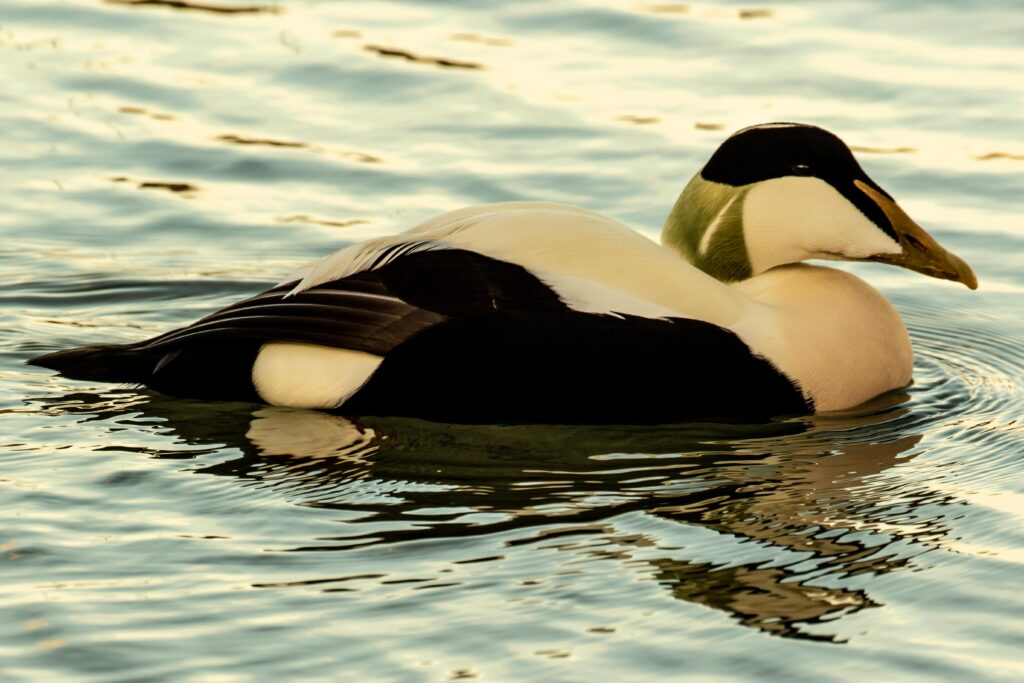
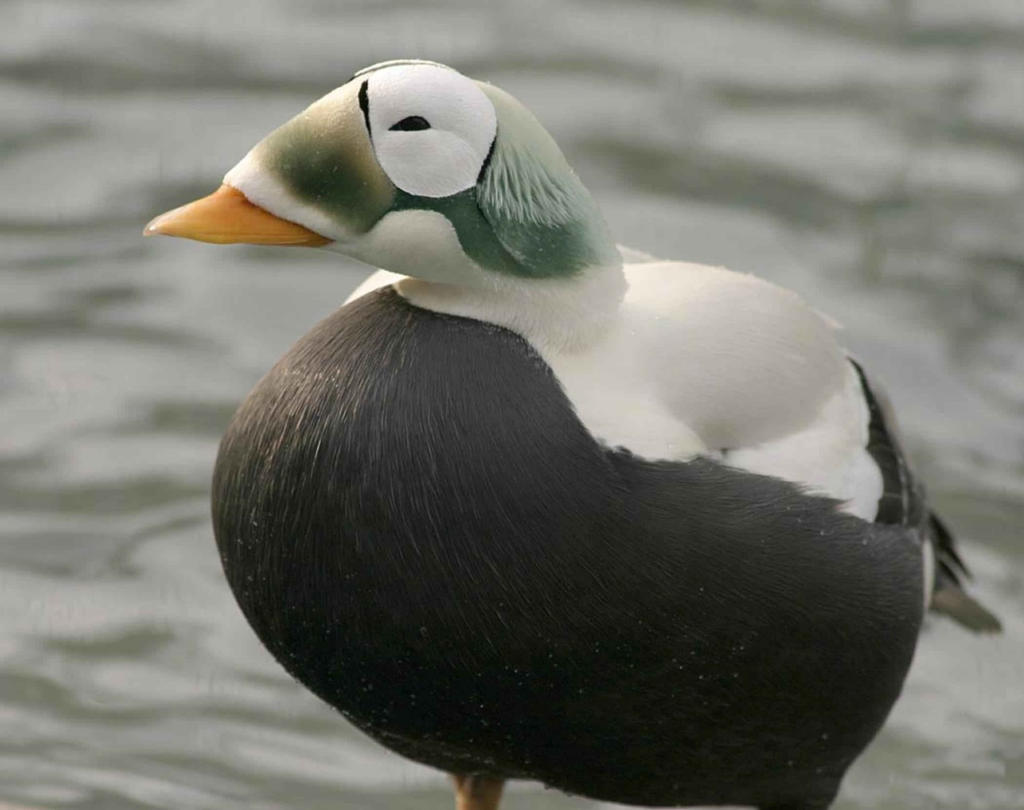
In flight, males show a large patch of white on the upper and middle coverts on a grayish-black wing. Females show brown wings with a lighter brown patch on the upper and middle coverts.
Prefers shallow tundra wetlands for nesting, and winters among pack ice in the Bering Sea in areas of up to 250 feet in depth.