Food Diet
Surf Scoters forage extensively on invertebrates, crustaceans, and mollusks throughout their annual cycle.
Surf Scoter
Description
Surf Scoters are poorly studied, medium-sized sea ducks that occur only in North America. They breed at low density throughout the boreal forest of Alaska and northern Canada, with the largest number breeding in western North America.
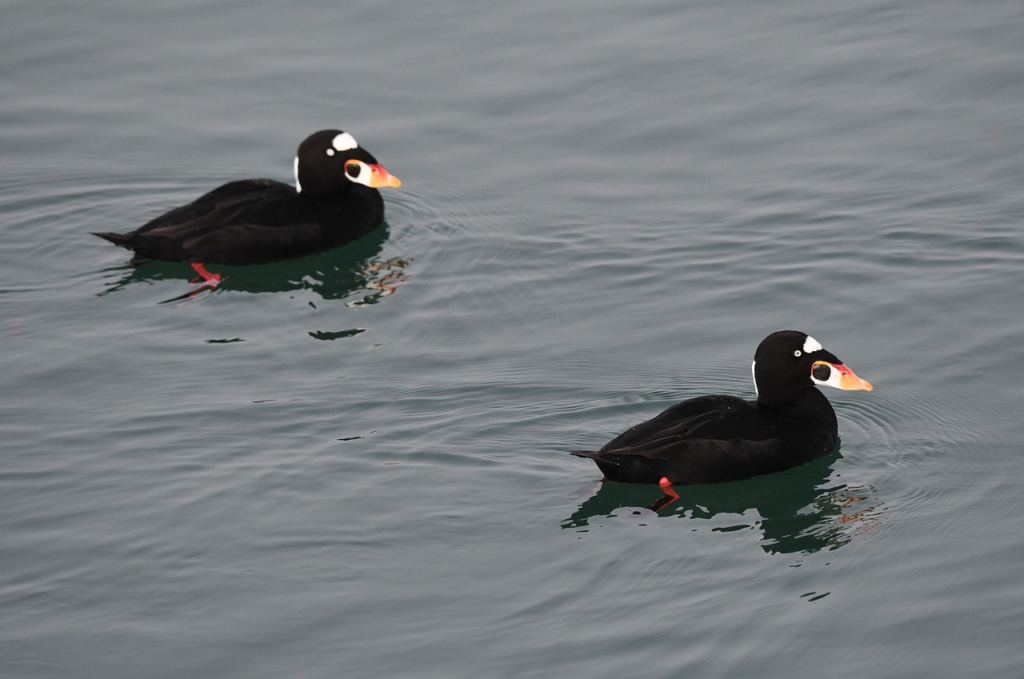
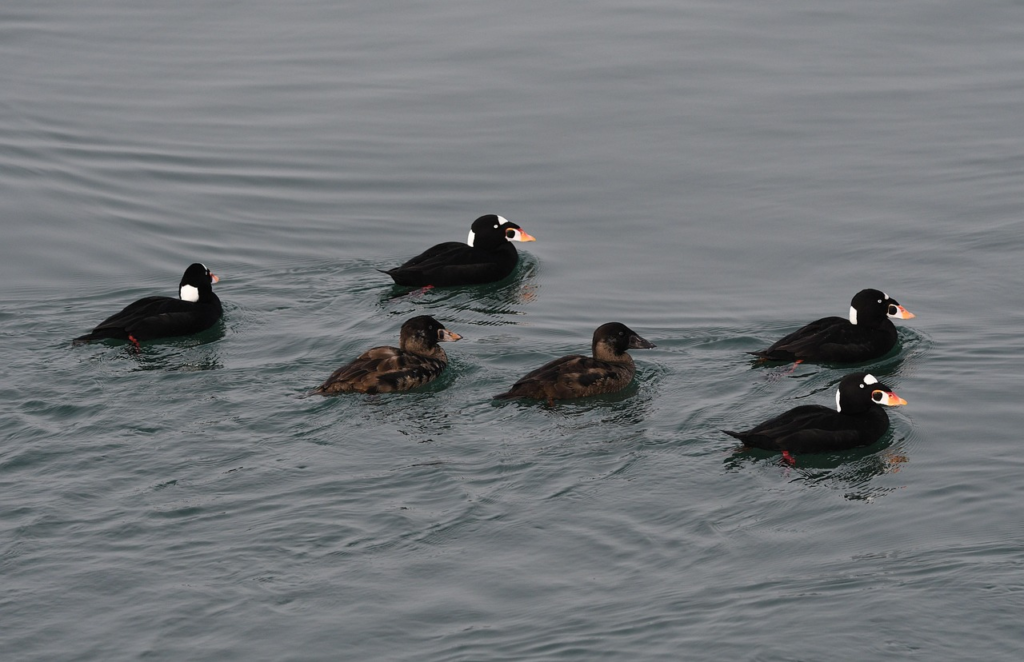
Adult males are unmistakable, being entirely velvety black with distinct white patches on the forehead and nape, and a bright, multi-colored red, white, and orange bill with a black spot towards the base. Females appear uniformly brown, with two indistinct white patches on the cheeks below the eye.
Long-Tailed Duck
Description
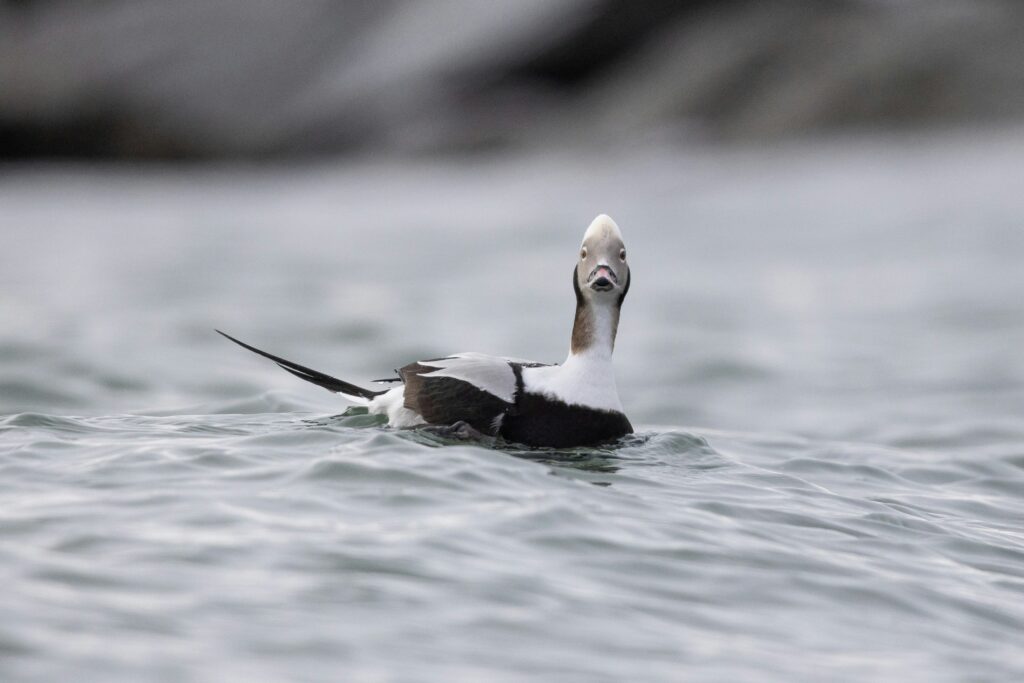
The Long-tailed Duck is a medium-sized sea duck with a circumpolar range. In North America, they range from Alaska across the Canadian Arctic, including many Arctic Islands, with some occurring as far north as 80°N latitude. Breeding habitats are tundra lakes and wetlands.
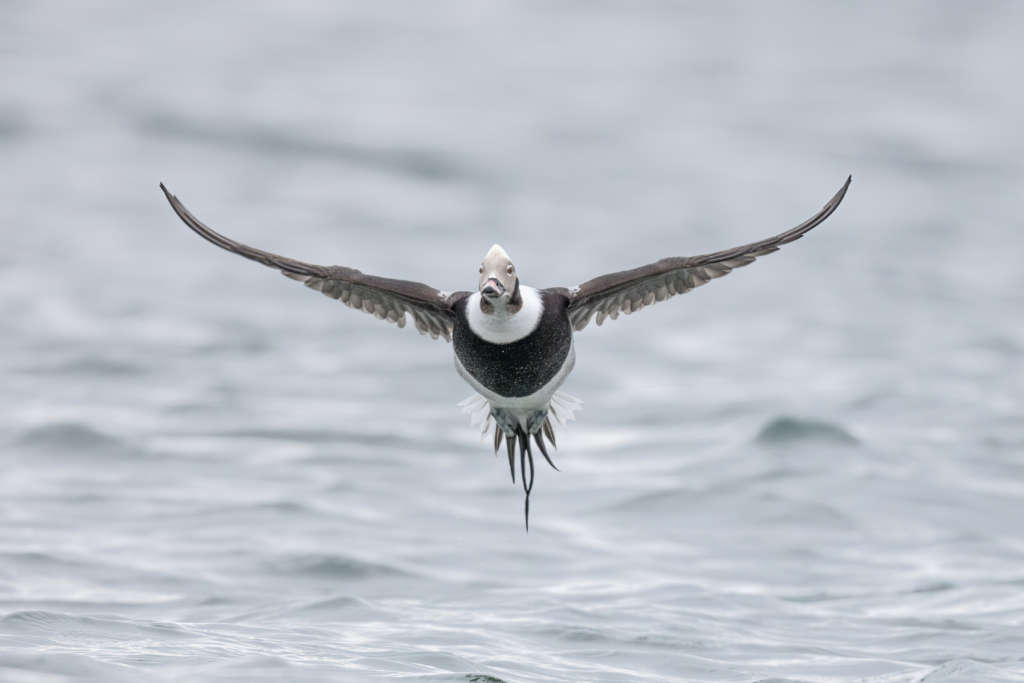
Unique among waterfowl, Long-tailed Ducks exhibit three plumages annually, contributing to their complex seasonal appearance. They are most often observed in wintering areas, where males display striking white plumage with dark ear patches and elongated tail feathers, while females are deep brown with white facial markings
Food Diet
Long-tailed Ducks are capable of diving to at least 240 feet and forage extensively on invertebrates throughout the annual cycle. During spring and summer, they ingest various species of aquatic insects and crustaceans, fish roe, and some vegetation. In winter they consume a wide range of invertebrates, especially crustaceans, bivalves, fish, and fish eggs.